
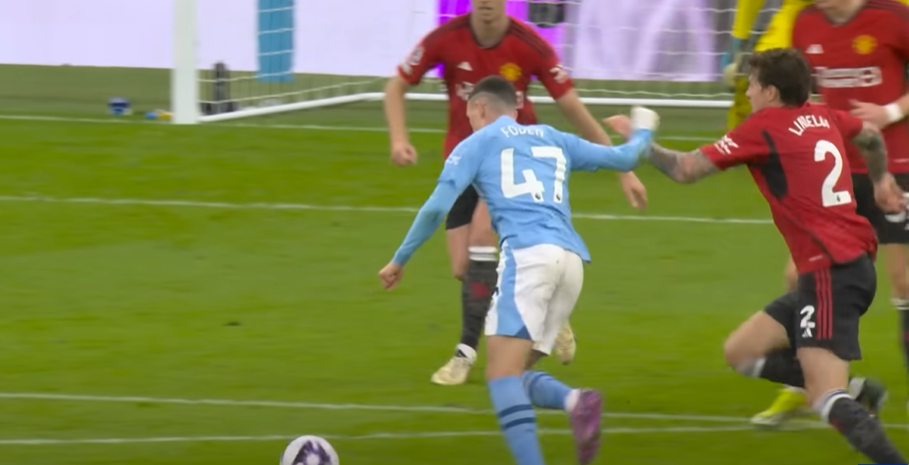
During the early stages of the Manchester derby, Phil Foden’s dominance on the pitch was unmistakable, akin to a skilled performer accompanied by a supporting actor, with Victor Lindelöf taking on the role of the companion, striving to contain Foden’s exceptional abilities. Despite Manchester United’s attempts to stifle him, Foden’s agility and skill set him apart, making it a challenging task for Lindelöf to keep pace.
As the match progressed, Foden’s influence grew, culminating in a spectacular goal that showcased his remarkable talent. Meanwhile, Marcus Rashford’s early goal for United was a rare highlight in an otherwise defensive strategy adopted by the team. United’s defensive approach, characterized by a packed midfield and a focus on thwarting City’s attacks, initially seemed effective but ultimately couldn’t contain Foden’s brilliance.
Foden’s versatility was evident as he adapted to different positions on the field, ultimately leading to City’s second goal, masterminded by Kevin De Bruyne and Julián Álvarez. Foden’s performance throughout the game was exemplary, marked by his precision, directness, and pivotal role in City’s victory.
In contrast to City’s current squad, which boasts physicality and power, Foden embodies a more traditional style reminiscent of Guardiola’s past teams, characterized by technical proficiency and finesse. His impact on the game highlighted his ability to excel in tight spaces and showcased his evolving skill set.
With his outstanding performance catching the attention of Gareth Southgate, Foden’s potential inclusion in England’s front four alongside promising talents like Bukayo Saka and Jude Bellingham signals a shift towards a genuinely formidable attacking lineup for the national team.